
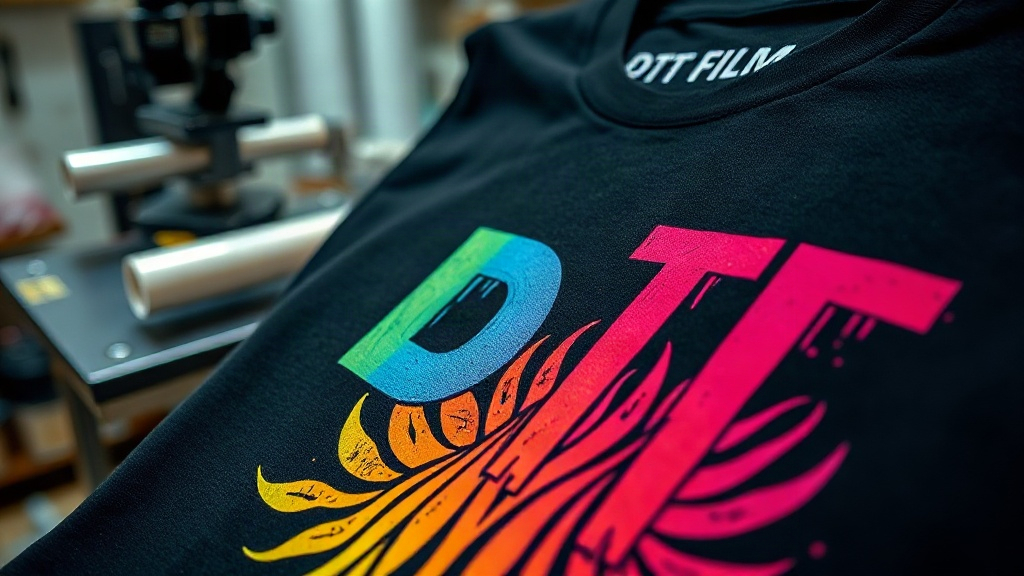
When you first venture into the world of custom apparel, one challenge quickly becomes clear: printing on dark fabrics. Traditional methods like screen printing or DTG often struggle to produce bright, opaque colors on black or navy garments. That's where DTF printing shines. Direct-to-film, or DTF, has revolutionized the industry by allowing anyone to transfer full-color, highly detailed designs onto dark materials with remarkable ease and durability. In this guide, we'll explore why DTF is the go-to solution for dark garments, how to get the best results, and answer some common questions. Whether you're a small business owner or a hobbyist, you'll find practical tips to elevate your prints.
Why DTF Excels on Dark Fabrics
Dark fabrics pose a unique set of problems for many printing techniques. The ink needs to be opaque enough to cover the dark background without losing vibrancy. With DTG, for instance, you often need a white underbase, which can be tricky to apply evenly and may feel thick. Screen printing requires separate screens for each color, making short runs expensive and time-consuming. DTF printing sidesteps these issues entirely. The process involves printing your design onto a special film, applying a hot-melt adhesive powder, and then transferring it to the fabric with a heat press. The result is a soft, stretchable print that sits on top of the fabric, so the dark color underneath doesn't affect the brightness of your design.
Another key advantage is the ability to print white ink as a base layer within the film itself. This means even the most delicate pastel colors or fine details will pop against a black t-shirt. Additionally, DTF transfers can be applied to a wide range of dark materials, including cotton, polyester, blends, and even leather. This versatility makes it a favorite among custom apparel creators.
The Science Behind the Brightness
What makes DTF prints so vivid on dark fabrics? It comes down to the film and ink formulation. The film is coated with a release layer that holds the printed ink. When you print, your printer lays down CMYK inks, followed by a white ink layer. This white layer acts as a foundation, ensuring that the colors above remain true. After printing, you apply adhesive powder, which melts into the ink during curing. When transferred, the adhesive bonds with the fabric fibers, while the white layer blocks the dark background. This clever construction is why DTF can achieve such striking results on dark garments.
Step-by-Step: DTF Printing on Dark Fabrics
To get professional-looking results, follow these steps carefully. While DTF is forgiving, attention to detail will set your prints apart.
1. Prepare Your Artwork
Start with a high-resolution image, ideally 300 DPI. Remember that DTF prints are mirrored, so flip your design horizontally before printing. If your design has fine lines or small text, ensure they are thick enough to transfer cleanly. For dark fabrics, you might want to slightly increase the saturation of your colors to compensate for any slight dulling during transfer.
2. Print and Powder
Load your DTF film into your printer. Print the design using your printer's recommended settings, usually with a white ink layer. After printing, while the ink is still wet, apply the hot-melt adhesive powder evenly over the design. Shake off excess powder, then cure the film in an oven or with a heat gun until the powder melts and becomes glossy. This step is crucial for durability.
3. Heat Press Transfer
Set your heat press to the temperature and time recommended for your fabric type. Typically, around 325°F (160°C) for 15 seconds with medium pressure. Place the cured film face-down onto the dark fabric. Press, then peel the film off while it's still warm (warm peel) or after it cools (cold peel), depending on the film type. Most DTF films are warm peel, but always check the manufacturer's instructions.
4. Post-Press and Care
For added durability, you can do a second press with a Teflon sheet for a few seconds. This ensures the adhesive fully bonds. Wait 24 hours before washing. Turn the garment inside out and wash in cold water. Avoid fabric softeners and bleach, and tumble dry low or hang dry. With proper care, your DTF prints will last as long as the garment itself.
Common Pitfalls and How to Avoid Them
Even though DTF is user-friendly, a few common mistakes can ruin your prints. Here are some to watch out for:
- Insufficient powder application: If you don't apply enough adhesive powder, the print may peel. Make sure the entire design is covered with a fine layer.
- Uneven pressure: A heat press with uneven pressure can cause parts of the design not to adhere. Check your press regularly for even pressure.
- Wrong peeling time: Peeling too early or too late can distort the print. Follow the film's instructions precisely.
- Over-stretching: While DTF prints are stretchable, over-stretching the garment before the print has cooled can cause cracking. Let it cool completely.
By avoiding these pitfalls, you'll achieve consistent, high-quality results.
Comparing DTF to Other Methods for Dark Fabrics
How does DTF stack up against other popular printing methods on dark fabrics? Let's compare:
- DTG: Requires pretreatment and often struggles with vibrancy on dark colors. DTF is more reliable and doesn't need pretreatment.
- Screen Printing: Cost-effective for large orders but expensive for small runs and limited colors. DTF is perfect for short runs and full-color designs.
- Heat Transfer Vinyl (HTV): Good for simple designs but not for complex images. DTF handles intricate details with ease.
- Sublimation: Only works on polyester and light colors. DTF works on cotton and dark fabrics.
Clearly, DTF offers a unique combination of versatility, quality, and cost-effectiveness for dark garments.
Frequently Asked Questions
Can DTF prints be applied to any dark fabric?
DTF transfers work well on a variety of dark fabrics, including cotton, polyester, blends, and even some nylons. However, fabrics with a heavy texture or coating may require special attention. Always test on a scrap piece first.
How durable are DTF prints on dark shirts?
When applied correctly, DTF prints are highly durable. They can withstand repeated washing without fading, cracking, or peeling. Following proper washing instructions will extend their life.
Do I need a special printer for DTF printing?
You can convert a standard inkjet printer to use DTF inks and films, but dedicated DTF printers are available and offer better reliability and print quality. If you're serious about DTF, investing in a dedicated printer is recommended.
What is the cost per print for DTF on dark fabrics?
The cost per print depends on the size of the design and the supplies used. Generally, DTF is more affordable than DTG for small runs and comparable to screen printing for larger runs. The lack of minimum order quantities makes it ideal for custom work.
Can I use DTF on dark garments with a heat press only?
Yes, a heat press is essential for DTF transfers. You'll need a press that can maintain consistent temperature and pressure. A home iron is not recommended as it doesn't provide even heat and pressure.
With this guide, you're ready to dive into DTF printing on dark fabrics. The possibilities are endless, from custom t-shirts to tote bags and more. Happy printing!