
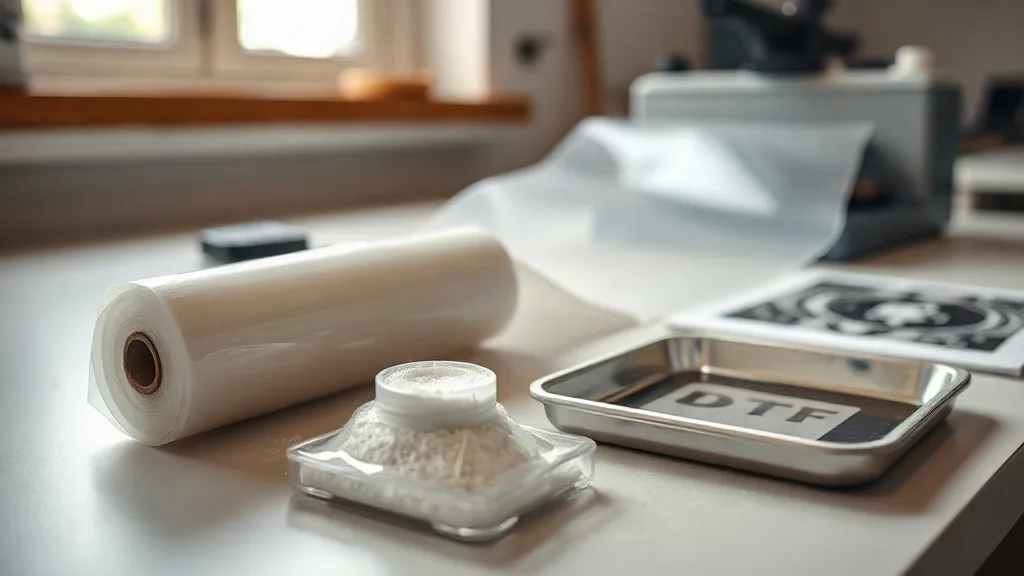
Most print shops obsess over press settings and ink profiles, then grab whatever film and powder is closest to the cutter. That order is backwards. Film and powder are the two variables you touch on every single job, and they set the ceiling for how soft, stretchy, and durable a dtf transfers print can ever be. Get them wrong and no amount of temperature tuning will save the result.
This guide is for the shop owner or operator who is past the beginner stage and wants a repeatable supply strategy. We will look at how film thickness and coating affect release, why powder mesh size changes the hand feel, and how to build a simple two-tier inventory that covers 90% of real orders without turning your shelf into a museum of half-used rolls.
Why film and powder deserve their own decision
In dtf printing, the film is not just a carrier. It is a coated surface that has to hold wet ink, accept powder, survive curing, and then release cleanly onto fabric under heat. Every one of those steps depends on the film's coating chemistry and thickness. A film that releases beautifully at 160°C may fight you at 150°C, and a film that feels fine on cotton can turn stiff on a tri-blend.
Powder plays a different role. It is the adhesive layer that bonds ink to fabric. The mesh size, or the particle size of the thermoplastic powder, determines how much adhesive sits on the ink, how soft the final print feels, and how well it stretches. Fine powder gives a softer hand but needs more careful application. Coarser powder is forgiving but can add bulk.
Treat these as a pair. The film decides how the print behaves before pressing; the powder decides how it behaves after.
Film: what actually matters when you buy
Thickness and coating
Most dtf film sold today falls in a narrow thickness range, but the coating is where brands differ. A good coating releases the print with a gentle, even peel and leaves almost no residue on the carrier. If you find yourself peeling hard, hearing a tear, or seeing ghosting on the film after transfer, the coating is probably mismatched to your press temperature or your powder.
Thicker film is not automatically better. It can be more forgiving during cutting and powdering, but it also holds more heat and can slow down your press cycle. For high-volume shops running tight schedules, a mid-thickness film with a reliable coating usually beats a heavy film that needs extra dwell time.
Cold peel versus hot peel
Film is generally formulated for one peel style. Cold-peel film wants the print to cool completely before the carrier comes off. Hot-peel film is designed to release while still warm. Using the wrong peel for the film is one of the fastest ways to get cracking or a dull finish. If you switch film brands, check the peel recommendation before you run a production batch.
Matte versus glossy finish
Matte film tends to produce a softer, more fabric-like finish and hides minor imperfections in the ink laydown. Glossy film can look sharper on dark garments but may show a faint outline if the powder is not fully cured. Neither is wrong; match the finish to the garment and the customer's expectation.
Powder: mesh size and application
Fine, medium, and coarse
Fine powder, often in the 80 to 100 micron range, gives the softest hand and is the go-to for lightweight tees and stretch fabrics. It requires a lighter sprinkle and cures quickly, but it can be less forgiving if your ink is too wet or your powdering station is uneven. Medium powder is the workhorse for general apparel. Coarse powder adds durability and bulk, which suits heavy hoodies, workwear, and bags where hand feel matters less than abrasion resistance.
Application technique
The goal is a thin, even coat that fully covers the wet ink without piling up. Shake the powder from a height that lets it dust evenly, then tilt and tap the film to knock off excess. A powder shaker with a fine screen helps, but technique matters more than equipment. If you see powder sitting in visible clumps, you are using too much, and the print will feel rough and may crack at the edges.
Humidity is the silent variable here. Powder absorbs moisture, and damp powder clumps, cures unevenly, and can leave a grainy texture. Store powder in a sealed container with a desiccant pack, and avoid powdering in a room above 60% relative humidity if you can.
Matching film and powder to the fabric
A simple rule: the lighter and stretchier the fabric, the finer the powder and the more consistent the film coating needs to be. On 100% cotton tees, medium powder and a standard cold-peel film will handle almost anything. On polyester and blends, fine powder plus a film that releases at lower temperatures reduces the risk of dye migration and shine.
For stretch fabrics like spandex blends, the powder layer needs to flex with the garment. Fine powder does this better because it creates a thinner adhesive layer. If you are printing on performance wear, test a small sample through a stretch cycle before committing to a full run.
Building a two-tier supply inventory
You do not need ten film types. Most shops can cover their work with two films and two powders:
- Everyday film in a mid-thickness, cold-peel coating for cotton and general blends.
- Stretch film with a coating formulated for lower pressing temperatures and finer powder compatibility.
- Medium powder for the bulk of apparel orders.
- Fine powder for lightweight, stretch, and premium-feel jobs.
Label your shelves clearly and keep a small log of which combination worked on which fabric. After a few weeks, you will see patterns that turn guesswork into a checklist.
When to source locally versus online
If you are in a hurry or testing a new film, searching for dtf transfers near me can get you a sample roll the same day. Local sourcing is also useful when you want to inspect coating quality before committing to a bulk order. For steady volume, online suppliers usually win on price and consistency, but only if you verify batch numbers and storage conditions.
Wherever you buy, ask how the film and powder were stored. Heat and humidity damage both, and a bargain roll that sat in a hot warehouse will cost you more in failed prints than you saved.
Testing before you commit
Before a new film or powder enters production, run a controlled test: print a small design with fine detail and a solid block, powder and cure as usual, press onto the fabric you use most, then wash and stretch the sample. Check for cracks at the edges, powder residue on the carrier, and any change in hand feel. Keep the sample labeled with the film, powder, and press settings. This habit alone will save you from most supply-related failures.
Frequently asked questions
Can I mix film and powder from different brands?
Yes, but test first. Film coatings and powder chemistries are designed to work together, and some combinations release poorly or cure unevenly. A small sample run will tell you quickly whether the pairing is safe for production.
How do I know if my powder is too coarse for a lightweight shirt?
Press a sample and feel the print. If it feels raised or stiff, or if it cracks when you stretch the fabric, the powder is likely too coarse. Switch to a finer mesh for that garment type.
Does film thickness affect press time?
It can. Thicker film holds more heat and may need a slightly longer dwell or a pre-press to reach the same release point. Always adjust based on test results rather than assumptions.
How should I store film and powder to keep them consistent?
Keep film rolls sealed and upright in a cool, dry place away from direct sunlight. Store powder in an airtight container with a desiccant pack. Avoid storing either in a room that swings between humid and dry, as moisture is the most common cause of inconsistent results.
Is fine powder always better for soft prints?
Fine powder gives a softer hand, but it is not automatically better for every job. Heavy garments and high-abrasion items often benefit from medium or coarse powder because the thicker adhesive layer holds up longer. Match the powder to the wear the garment will see.